
18 June 2026 · AruYami Naturals
Raw Honey vs Processed Honey: How to Tell the Difference
Not all honey is the same. Learn what raw honey really is, how heating and processing change it, and easy at-home checks to spot the difference.
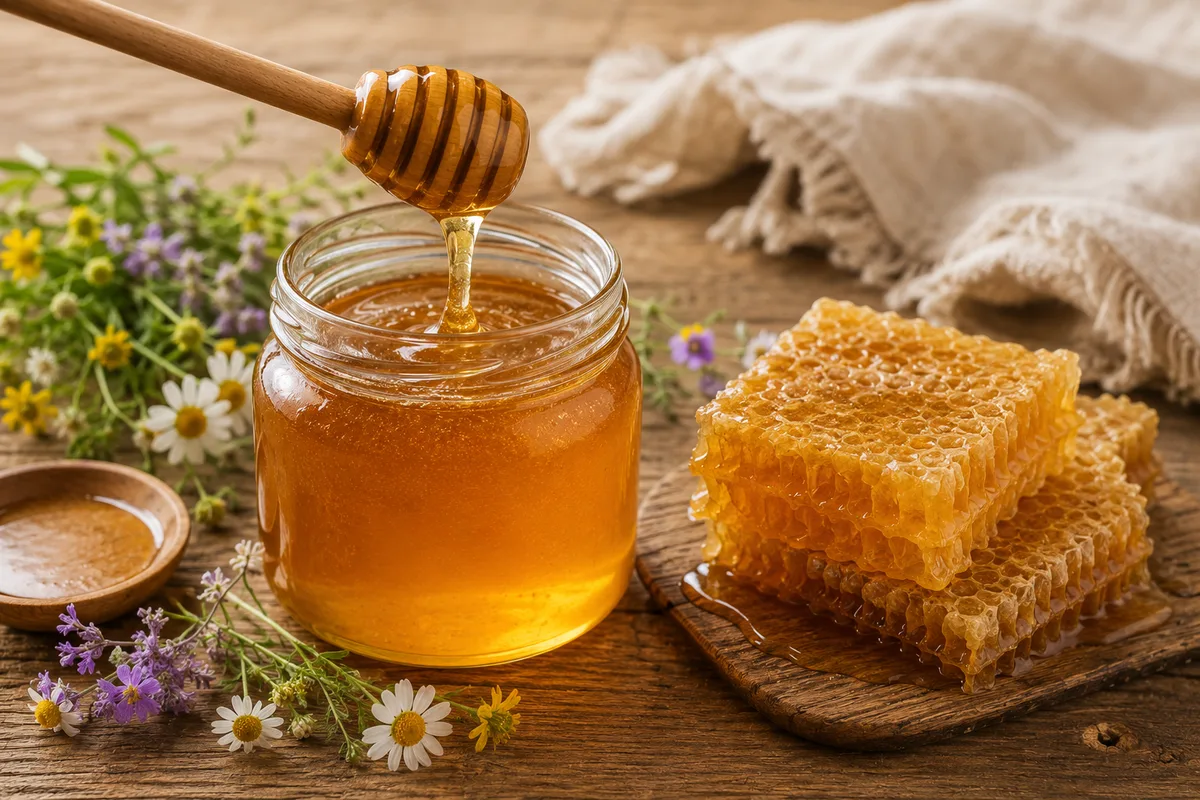
Honey is one of nature's oldest gifts — a spoonful of sweetness straight from the hive. But not all honey in the market is the same. Some jars hold raw, living honey just as the bees made it. Others have been heated, filtered and processed until much of that natural goodness is gone. If you have ever stood in a shop wondering which one to buy, this simple guide is for you.
What is raw honey?
Raw honey is honey in its most natural form. After bees fill the comb, it is gently extracted and strained to remove bits of wax and debris — and that's it. It is not heated to high temperatures or finely filtered, so it keeps its natural pollen, enzymes, aroma and that thick, golden character.
Because it is minimally handled, raw honey often looks a little cloudy and may crystallise (turn grainy or solid) over time. Many people see this as a sign of purity, not a problem. A gentle warm-water bath brings it back to a smooth, pourable state.
How processing changes honey
Most honey sold in big shiny bottles is processed honey. To make it look uniform, last longer on shelves and pour easily, it usually goes through:
- High heat (pasteurisation): smooths texture but can reduce delicate natural enzymes and aroma.
- Ultra-fine filtering: removes natural pollen and makes honey crystal clear.
- Blending: mixing honey from many sources, sometimes with added syrups or sugars.
The result is a sweet liquid that looks perfect but has lost much of what made honey special in the first place. At AruYami, we believe honey should reach your family the way the bees intended — naturally made, never over-processed.
Simple at-home checks
You don't need a laboratory to get a feel for your honey. These traditional checks are not foolproof, but they help you observe and compare:
- The thumb test: Put a small drop on your thumb. Raw honey tends to stay put as a thick bead rather than running off quickly like thin syrup.
- Crystallisation: If your honey turns grainy or solid in cool weather, that is normal for raw honey. Heavily processed honey often stays runny for very long.
- Aroma and taste: Raw honey usually has a fuller, flower-like fragrance and a flavour that can change with the season and the flowers the bees visited.
- The texture: Raw honey feels denser and coats the spoon, while many processed varieties feel lighter and water-thin.
Remember, honey naturally varies from batch to batch and season to season. Slight differences in colour, thickness or taste are signs of a real, farm-fresh product — not a fault.
How to enjoy raw honey at home
Raw honey is wonderfully versatile in a Telugu kitchen and beyond:
- Stir a spoonful into warm (not boiling) water with a squeeze of lemon in the morning.
- Drizzle over dosa, idli, fruit, curd or roti instead of refined sugar.
- Add to your evening tea or milk once it has cooled slightly.
- Use it in homemade chutneys, dressings and sweets for natural sweetness.
A small tip: avoid mixing raw honey into very hot or boiling liquids. Gentle warmth helps it keep its natural character and aroma.
Storing it right
Keep honey in a clean, dry, airtight jar away from direct sunlight. Always use a dry spoon — moisture is honey's main enemy. Stored well, good honey lasts a long time, and crystallisation is easily reversed with a warm-water bath. There is no need to refrigerate it.
The AruYami way
Choosing raw, naturally made honey is a small switch that brings your family closer to pure, traditional food — the way our grandmothers knew it. It is honest sweetness, sourced with care and free from unnecessary processing.
If you would like to taste the difference for yourself, explore our farm-fresh, naturally made raw honey — pure sweetness, straight from natural farms to your family.
Bring tradition & nature to your kitchen
Shop AruYami Naturals