
15 June 2026 · AruYami Naturals
Jaggery: The Natural Sweetener Your Family Will Love
Discover why jaggery (bellam) is the wholesome sweetener Telugu families have trusted for generations, plus easy ways to use and store it at home.
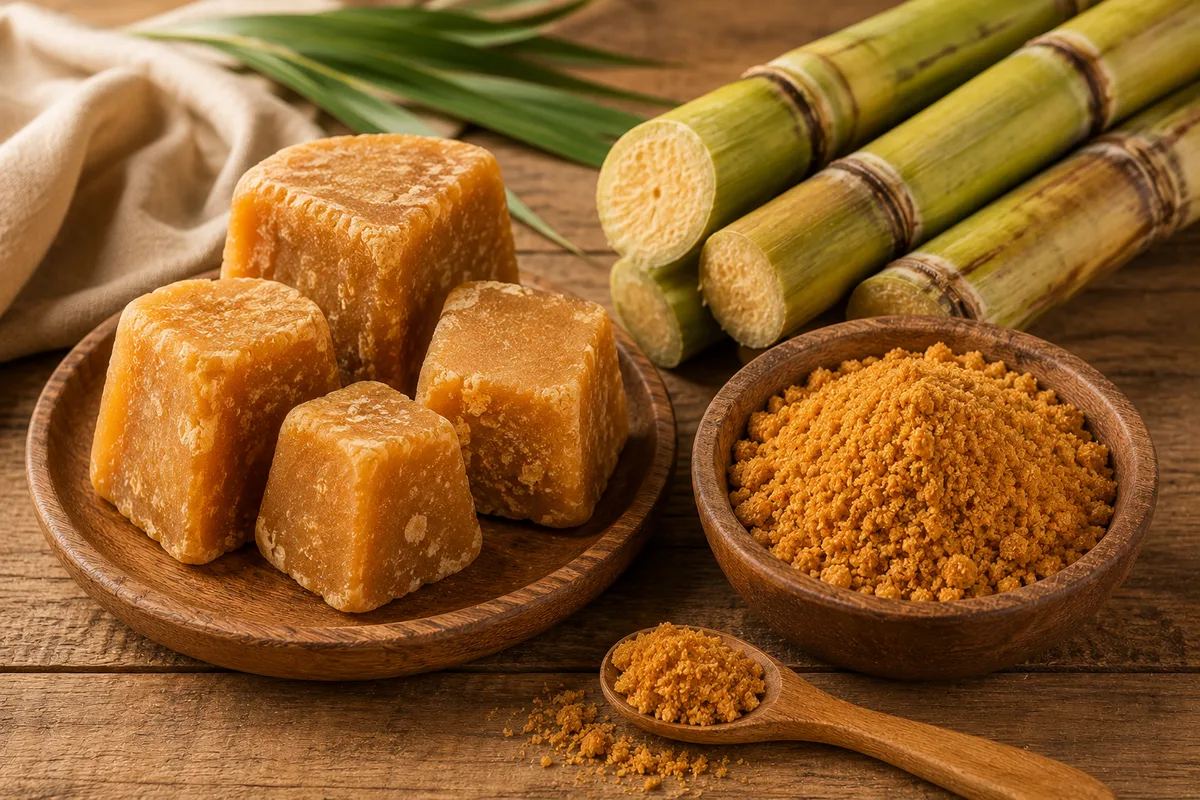
There is something comforting about the deep, caramel aroma of bellam melting into warm milk or a festival sweet. For generations, Telugu families have reached for jaggery long before refined sugar arrived in our kitchens. At AruYami Naturals, we believe this golden-brown sweetener still deserves a proud place on your shelf.
What Exactly Is Jaggery?
Jaggery, or bellam as we lovingly call it, is made by slowly boiling fresh sugarcane juice (and sometimes date or palm sap) until it thickens and sets. There is no chemical bleaching, no refining, and no separating out the natural goodness. What you get is an unrefined sweetener that keeps its rich colour, minerals, and earthy flavour intact.
That single difference, refined versus unrefined, is the heart of the story.
Jaggery vs Refined Sugar
Refined white sugar is processed heavily until only pure sucrose remains. Everything else, including the natural molasses, is stripped away. Jaggery skips that stripping step, so it holds on to small amounts of iron and other minerals naturally present in the cane.
Here is how families often compare the two:
- Processing: Jaggery is traditionally made and unrefined; white sugar is heavily processed.
- Flavour: Jaggery brings a warm, caramel depth; sugar is flat and only sweet.
- Colour: Natural golden to deep brown versus stark white.
- Use in tradition: Jaggery has been part of our prasadam, pickles, and daily cooking for centuries.
We never claim jaggery is a health cure. It is still a sweetener, so enjoy it in sensible amounts. The honest appeal is simple: it is closer to its natural form and adds character that sugar simply cannot.
How to Use Jaggery: Powder vs Cubes
Both forms come from the same wholesome source. Choosing between them is really about convenience for your dish.
Jaggery powder dissolves quickly and measures easily, which makes it lovely for:
- Everyday chai, coffee, and warm milk
- Quick payasam and kheer
- Baking, smoothies, and breakfast porridge
- Sprinkling over dosa, idli, or fruit
Jaggery cubes or blocks are ideal when you want to control quantity or melt a larger amount:
- Festival sweets like ariselu, chakkara pongali, and laddus
- Slow-cooked dishes where jaggery melts gradually
- A small piece after meals, the way our elders enjoyed it
A handy tip: to melt a cube, grate or chop it first, add a splash of water, and warm gently until it forms a smooth syrup. Strain if you prefer a clean finish.
Simple Storage Tips
Because jaggery is natural and free from artificial preservatives, a little care keeps it fresh and tasty:
- Keep it dry. Moisture is jaggery's only real enemy, so store it away from steam and damp corners.
- Use an airtight container. Glass or steel jars with tight lids work beautifully.
- Store in a cool, dark spot. Avoid direct sunlight and heat from the stove.
- Use a clean, dry spoon every time to prevent any moisture creeping in.
- Refrigerate in humid weather if you live near the coast or during the monsoon.
Stored well, jaggery stays good for months, ready whenever a recipe or a craving calls.
A Sweet Return to Tradition
Switching from refined sugar to jaggery is one of those small, gentle changes that feels right. It connects your family's table to the farms and traditions our grandmothers knew well. Whether you stir powder into your morning chai or melt a cube for festival sweets, you are choosing flavour with roots.
At AruYami Naturals, our jaggery is traditionally made and chemical-free, sourced directly from farmers who care about doing it the honest way.
Ready to bring home that golden goodness? Explore our range of natural sweeteners at /category/sweeteners and taste the difference tradition makes.
Bring tradition & nature to your kitchen
Shop AruYami Naturals